A Legendary Lens in the Sky: Why the Hasselblad Drone Turns Heads
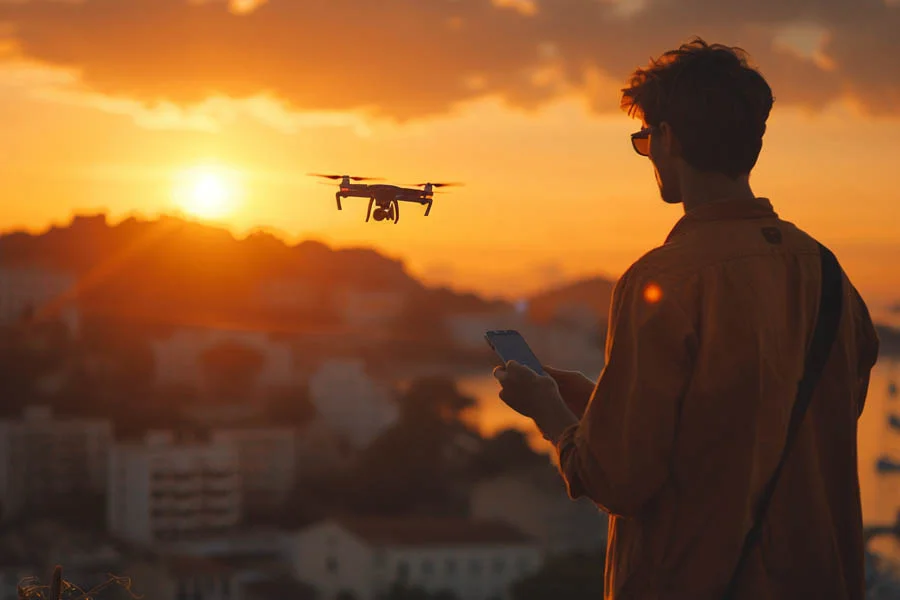
Some camera names carry decades of prestige, and Hasselblad sits near the very top of that list. The Swedish brand’s cameras famously traveled to the Moon and shaped generations of fashion photography. When its imaging technology appeared on a folding consumer drone, photographers paid close attention. A Hasselblad drone promised aerial images with the natural color and detail associated with high-end studio cameras. That promise rested on a larger sensor, careful color science, and an adjustable aperture rarely seen on drones. This article explores what those features mean for real photographs. It references a folding drone the listing identifies as the Mavic 2 Pro, built around a Hasselblad camera. You will learn how sensor size, aperture, and RAW files improve your images. Practical advice on owning and flying it responsibly follows. Prepare to see landscapes with fresh eyes.
The Hasselblad Drone Story
Collaborations between drone makers and camera brands aim to combine flight technology with imaging expertise. The partnership behind the Mavic 2 Pro paired a folding airframe with a Hasselblad-branded camera. That model became one of the first consumer drones with a 1-inch sensor in a compact body. Photographers praised its natural color rendering, often attributed to Hasselblad’s color calibration. Real estate agents, travel creators, and landscape artists adopted it widely. The design folds small enough to fit in a camera bag alongside other gear. Omnidirectional obstacle sensing and GPS stabilization made it approachable for careful newcomers. Up to 31 minutes of flight time allowed relaxed composition rather than rushed shooting. Its reputation endures among photographers who value image quality. Heritage, in this case, meets modern flight.
Why Sensor Size Matters
Sensor size determines how much light the camera collects during each exposure. A 1 inch sensor offers roughly four times the area of the small sensors common in budget drones. That extra area reduces noise, especially during golden hour, twilight, and cloudy conditions. Dynamic range improves as well, preserving bright skies and dark shadows in one frame. Larger pixels render smoother gradients, which matters for sunsets and open water. Fine textures such as rooftops, foliage, and rock formations appear more detailed. This drone pairs its 1-inch CMOS sensor with HDR capabilities for challenging lighting. Editing flexibility increases because files contain more usable information. Sensor size remains the single biggest factor in image quality. Bigger, in this case, really is better.
Shooting Stills with a Hasselblad Drone
Still photography rewards slower, more deliberate flying than video work. Hover at your chosen height, compose carefully, and take several exposures before moving on. Shooting raw drone photos preserves maximum detail and editing latitude compared with compressed formats. A Hasselblad drone captures files that respond beautifully to adjustments in shadows and highlights. Bracketing modes take multiple exposures for blending into HDR images later. Panorama modes stitch several frames into sweeping wide or spherical views automatically. Grid overlays help align horizons and apply the rule of thirds. Midday light can look harsh, so early mornings and late afternoons often work best. Review images on the controller screen and zoom in to check focus. Careful technique unlocks the camera’s full potential.
Controlling Light in the Air
Most consumer drones use fixed apertures, limiting creative control over exposure. This model includes an adjustable aperture, commonly published as ranging from f/2.8 to f/11 for the Mavic 2 Pro. Narrower apertures help in bright conditions, reducing overexposure without extreme shutter speeds. Wider settings gather more light at dawn, dusk, and under heavy clouds. Video shooters can maintain natural motion blur by adjusting aperture alongside ND filters. Landscape photographers often choose middle apertures for the sharpest overall detail. Manual exposure controls in the app give experienced users full creative authority. Automatic modes remain available for quick, reliable snapshots. Flexibility like this resembles a traditional camera more than a flying gadget. Light becomes something you shape rather than accept.
Hasselblad Drone Color and Character
Color science shapes the mood of every image, often more than resolution. Photographers describe this camera’s colors as natural, balanced, and pleasing straight from the drone. Skin tones look realistic, foliage avoids neon greens, and skies keep subtle gradations. Video shooters can record in the 10-bit Dlog-M profile for extensive grading later. That profile captures over one billion colors, according to the listing, preventing banding in smooth areas. Standard color modes produce ready-to-share images for quick social posts. Consistent color across photos and video simplifies editing mixed projects. Landscapes from the same flight match effortlessly in a single gallery. Character like this builds a recognizable visual style. Good color makes viewers feel the place.
Owning a Hasselblad Drone Today
Ownership involves more than flying, especially for pilots in the United States. This model weighs well over 250 grams, so FAA registration is required before any flight. Recreational pilots need the free TRUST certificate, while paid work requires a Part 107 license. Firmware updates added Remote ID broadcast support, so update before your first outing. Older models can have limited accessory availability, so check spare batteries and propellers early. Store batteries at partial charge and inspect propellers before every flight. Keep firmware current for safety improvements and compatibility. Practice in open spaces before attempting demanding shots near people or structures. To review specifications and included items, visit the product page before purchasing. A legendary camera deserves a responsible pilot.